 Whatsable





TL;DR:
- WhatsApp is the most effective client retention channel because it offers high open and response rates. Agencies use personalized, behavior-triggered messaging to build ongoing relationships and reduce client churn. Proper automation, compliance, and measurement are essential for maximizing WhatsApp retention strategies.
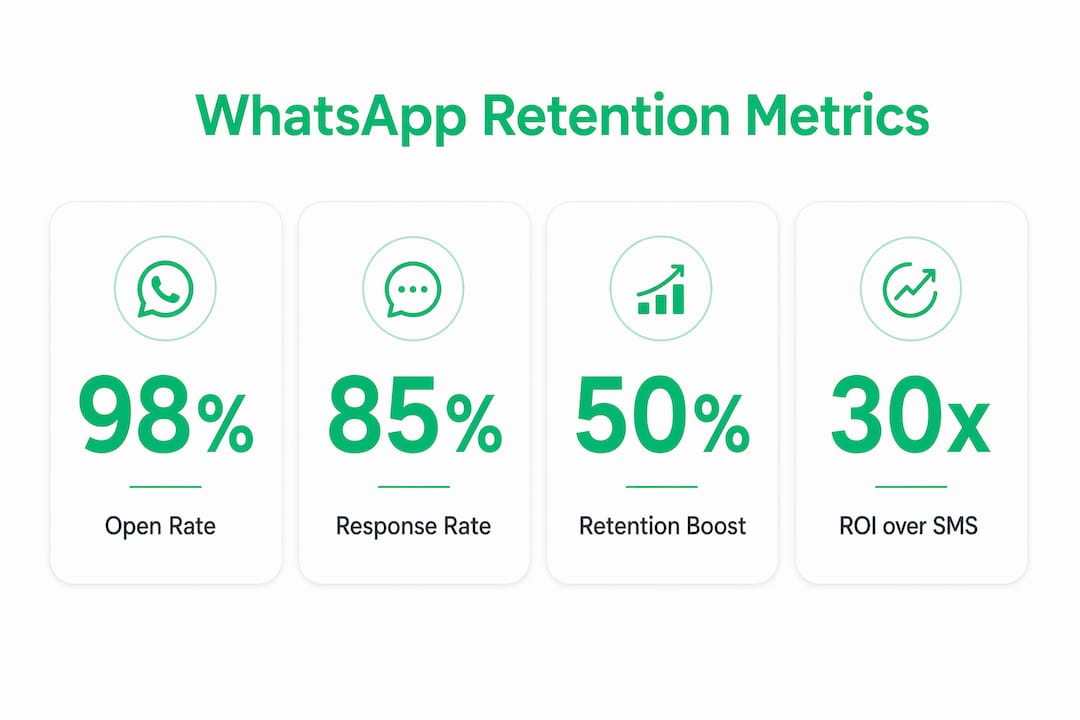
WhatsApp is the most effective client retention channel agencies use today, combining near 98% open rates with real-time, personal communication that email simply cannot match. The industry term for this approach is conversational retention marketing, and it describes how agencies build ongoing client relationships through messaging rather than broadcast campaigns. With 90% of adults active on WhatsApp daily, agencies that ignore this channel create a gap competitors will fill. This guide explains why agencies use WhatsApp for retention, which strategies actually work, and how to measure results without guesswork.
Why agencies use WhatsApp for retention: the core mechanics
WhatsApp retention works because it meets clients where they already spend time. Email sits in an inbox clients check twice a day. WhatsApp sits on a screen clients check dozens of times. That behavioral difference alone explains why open rates exceed 90% on WhatsApp compared to roughly 20–25% for email. Higher open rates mean more clients actually see your follow-ups, updates, and offers.

The second mechanic is conversational continuity. Unlike email threads that fragment across folders, WhatsApp keeps every exchange in a single chat history. Clients remember the context. Agencies remember the context. That shared memory builds trust faster than any newsletter sequence.
The third mechanic is automation paired with a human voice. Agencies use tools like Whatsable to send behavior-triggered messages automatically, while keeping the tone personal and direct. A client who just completed a project receives a check-in message within hours, not days. That speed signals attentiveness, and attentiveness drives loyalty.
WhatsApp also supports full conversational journeys covering acquisition, service, operations, and retention in one platform. Agencies no longer need separate tools for onboarding emails, support tickets, and retention campaigns. One channel handles the entire client lifecycle.
How does WhatsApp personalization improve client retention?
Personalization is the difference between a client who renews and one who quietly leaves. WhatsApp makes personalization practical at scale through segmentation and automation.
Agencies segment clients by service tier, engagement level, or contract stage. A client in month two of a retainer gets different messages than a client approaching renewal. That relevance increases response rates and reduces the chance a client feels like a number in a spreadsheet.
Key personalization tactics agencies use:
- Name-based greetings in every automated message, pulling from CRM data
- Milestone messages triggered by contract anniversaries, project completions, or usage milestones
- Behavior-triggered follow-ups sent within hours of a client action, such as opening a report or submitting a support request
- Segmented broadcast lists that send relevant updates only to clients in a specific service category
Automation reduces repetitive tasks and keeps communication consistent without burning out account managers. An agency managing 50 clients cannot manually send timely follow-ups to each one. Automation handles the timing; the message still feels personal.
Pro Tip: Connect your WhatsApp automation to your CRM using integrations like Zapier or Pipedrive. When a client’s contract stage changes in the CRM, a tailored WhatsApp message fires automatically. No manual trigger needed.
Integrating WhatsApp with your CRM for richer context also means every agent who picks up a conversation sees the full client history. That context prevents the frustrating experience of a client repeating themselves to a new contact.
What WhatsApp marketing strategies do agencies use to retain clients?
The most effective WhatsApp marketing strategies for retention combine timing, media, and measurement. Agencies that treat WhatsApp as a broadcast tool miss the point. The channel rewards conversation, not announcements.
-
Behavior-triggered sequences. Send a message when a client completes onboarding, hits a usage milestone, or goes quiet for two weeks. Silence is a retention signal. An automated check-in at day 14 of inactivity recovers relationships before they deteriorate.
-
Rich media updates. Images, videos, and catalogs drive higher engagement than plain text. Agencies send monthly performance summaries as visual PDFs, short video walkthroughs of new features, or interactive buttons that let clients book a call in one tap.
-
Hybrid chatbot and human handoff. Chatbots handle routine questions around the clock. When a client asks something complex or signals frustration, the conversation routes to a human agent immediately. That combination delivers speed without sacrificing quality.
-
Renewal and upsell campaigns. Sixty days before a contract ends, agencies start a WhatsApp sequence that highlights results, shares a renewal offer, and invites a call. The sequence runs automatically but reads like a personal outreach from the account manager.
-
Feedback loops via quick-reply buttons. After a deliverable, agencies send a two-question satisfaction check using WhatsApp’s interactive buttons. Clients respond in one tap. Agencies get structured data without asking clients to fill out a form.
Agencies managing multiple clients benefit from AI content tools that help produce personalized message content at scale without sacrificing quality or relevance.
What challenges do agencies face with WhatsApp retention?
The biggest mistake agencies make is over-messaging. WhatsApp feels personal, so clients react more strongly to irrelevant or frequent messages than they would to the same email. Sending three promotional messages in a week trains clients to mute the conversation.
Common pitfalls and how to avoid them:
- Ignoring opt-in compliance. WhatsApp enforces explicit opt-in rules strictly. Sending messages to clients who have not opted in risks account suspension. Every retention workflow must start with a documented consent step.
- Broken automation sequences. A follow-up that fires at the wrong time or references the wrong project damages trust instantly. Test every workflow with a live account before deploying to clients.
- No escalation path. Chatbots without a clear handoff to a human agent frustrate clients who need real answers. Define the trigger conditions for human escalation before launching any bot.
- Inconsistent templates. Agencies managing multiple client accounts often create one-off messages for each situation. Reusable, white-label templates reduce errors and speed up campaign deployment across accounts.
Pro Tip: Review your common automation mistakes before launching any new WhatsApp retention sequence. A single misconfigured trigger can send hundreds of incorrect messages before anyone notices.
Operational friction is the hidden cost most agencies underestimate. When account managers juggle multiple tools to manage WhatsApp conversations, response times slow and messages fall through the cracks. Centralizing WhatsApp workflows in one platform solves this before it becomes a client complaint.
How do agencies measure WhatsApp retention performance?
Measurement separates agencies that use WhatsApp well from those that use it blindly. Four metrics matter most for retention: open rate, response rate, opt-out rate, and revenue retained per cohort.
Open rate confirms messages are reaching clients and getting read. Response rate shows whether the content is relevant enough to prompt a reply. Opt-out rate signals over-messaging or irrelevance. Revenue retained per cohort connects WhatsApp activity directly to business outcomes.
| Metric | What it measures | Healthy benchmark |
|---|---|---|
| Open rate | Message visibility | Above 90% |
| Response rate | Content relevance | Above 30% |
| Opt-out rate | Messaging quality | Below 2% |
| Renewal rate | Retention impact | Varies by agency |
WhatsApp API-based messaging costs less per message than SMS, making it practical to run frequent retention touchpoints without inflating campaign budgets. That cost efficiency improves ROI compared to traditional channels, especially for agencies with international clients.
Combining WhatsApp data with CRM records gives agencies a complete picture of each client’s engagement history. A client who opens every message but never responds is a different risk than one who responds quickly but skips renewal conversations. That nuance only appears when you connect channel data to account records.
The 2026 guide to WhatsApp retention outlines how agencies can build measurement frameworks that connect WhatsApp engagement to long-term client lifetime value.
Key Takeaways
Agencies that treat WhatsApp as a core retention channel, not a side tool, consistently outperform those relying on email alone because the channel’s open rates, personalization capabilities, and automation options directly reduce client churn.
| Point | Details |
|---|---|
| Open rate advantage | WhatsApp open rates exceed 90%, far above email’s 20–25%, making messages far more likely to be seen. |
| Automation with a personal voice | Behavior-triggered sequences keep communication timely without requiring manual effort from account managers. |
| Compliance is non-negotiable | Explicit opt-in is required by WhatsApp; skipping it risks account suspension and destroys retention programs. |
| Measure four core metrics | Track open rate, response rate, opt-out rate, and revenue retained to connect WhatsApp activity to business results. |
| Centralize to scale | Reusable templates and integrated workflows reduce operational friction across multiple client accounts. |
WhatsApp as a retention layer, not a side channel
The agencies I’ve watched succeed with WhatsApp retention share one trait: they stopped treating it as a marketing add-on and started treating it as the primary communication layer. That shift changes everything about how you design workflows, train account managers, and measure success.
What surprises most retention professionals is how quickly clients adapt to WhatsApp as the default channel. Once a client receives a timely, relevant message on WhatsApp, they start expecting that standard. Email feels slow by comparison. That expectation is an asset if you maintain it, and a liability if you let it slip.
The agencies that struggle are the ones that automate without thinking about the human handoff. A bot that handles 80% of routine questions is valuable. A bot that traps a frustrated client in a loop is a churn accelerator. The design of the escalation path matters as much as the automation itself.
My honest observation after watching dozens of agencies adopt WhatsApp for retention: the technology is not the hard part. The hard part is getting account managers to trust the automation and getting leadership to commit to the channel long enough to see compounding results. WhatsApp retention is not a campaign. It is a relationship infrastructure. Agencies that build it properly find that clients stay longer, spend more, and refer others without being asked.
— Axel
Whatsable: built for agency WhatsApp retention
Agencies looking to put these strategies into practice without building custom infrastructure have a direct path forward with Whatsable.
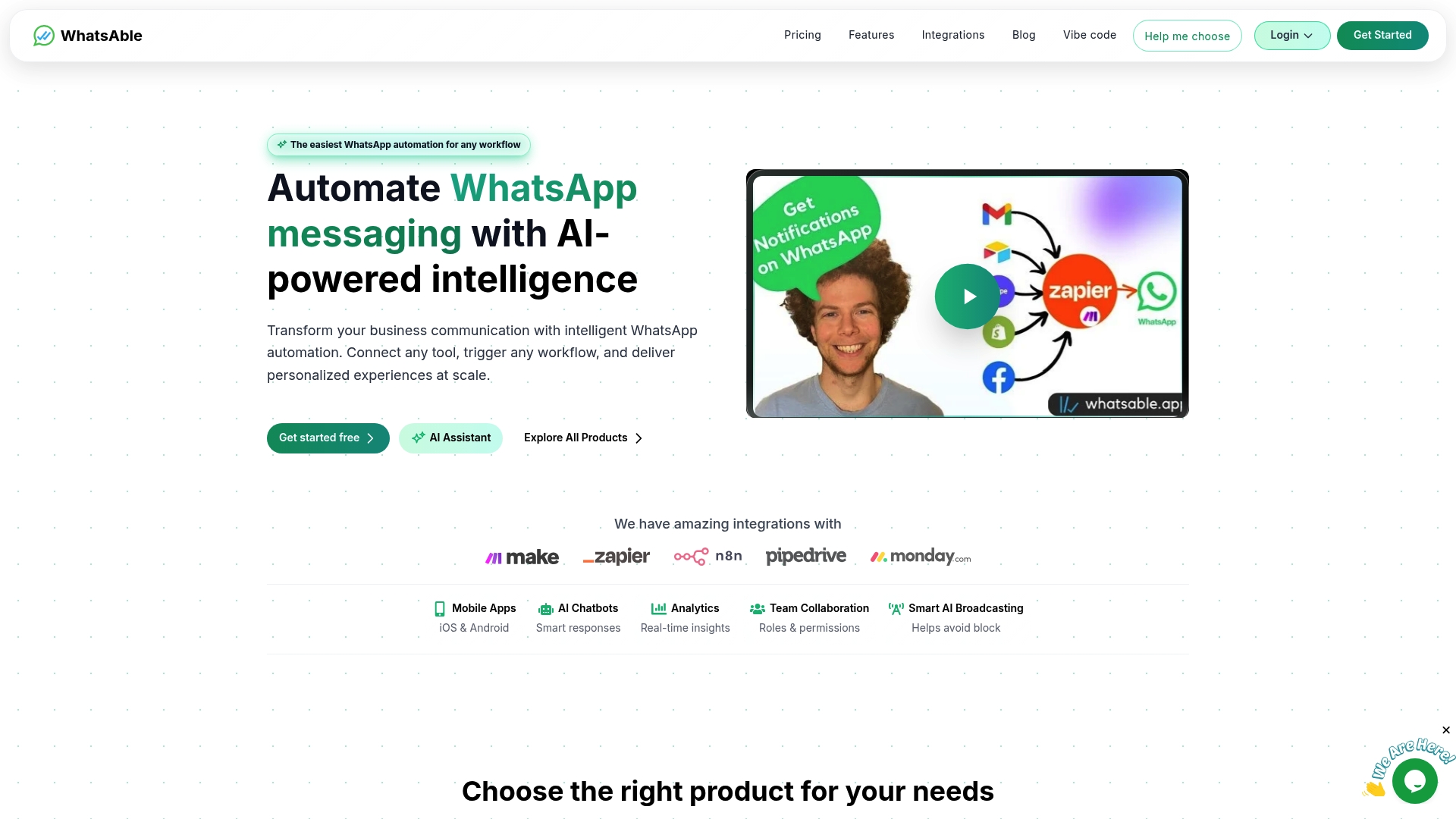
Whatsable’s Notifyer System lets agencies send unlimited branded WhatsApp messages, automate follow-up sequences, and connect to tools like Zapier, Make, n8n, and Pipedrive without writing code. White-label templates and centralized client management reduce the operational overhead of running retention programs across multiple accounts. AI-powered chatbots handle routine client questions while routing complex conversations to human agents. Check the Whatsable pricing plans to find the tier that fits your agency’s client volume and retention goals.
FAQ
Why do agencies prefer WhatsApp over email for retention?
WhatsApp open rates exceed 90% compared to roughly 20–25% for email. Clients read WhatsApp messages faster and respond more often, making it a more reliable channel for retention communication.
What is conversational retention marketing?
Conversational retention marketing is the practice of building ongoing client relationships through direct messaging rather than broadcast campaigns. WhatsApp is the primary channel agencies use for this approach because of its reach and engagement rates.
How do agencies avoid getting their WhatsApp account banned?
WhatsApp requires explicit opt-in from every contact before agencies can send messages. Skipping this step or sending too frequently risks account suspension, which ends all retention workflows immediately.
Can WhatsApp automation replace human account managers?
Automation handles routine follow-ups, milestone messages, and FAQ responses, but human agents remain necessary for complex conversations and escalations. The most effective agency setups combine both.
How does WhatsApp retention ROI compare to SMS?
WhatsApp API-based messaging typically costs less per message than SMS while delivering higher open and response rates. For agencies with international clients, the cost advantage is especially significant.